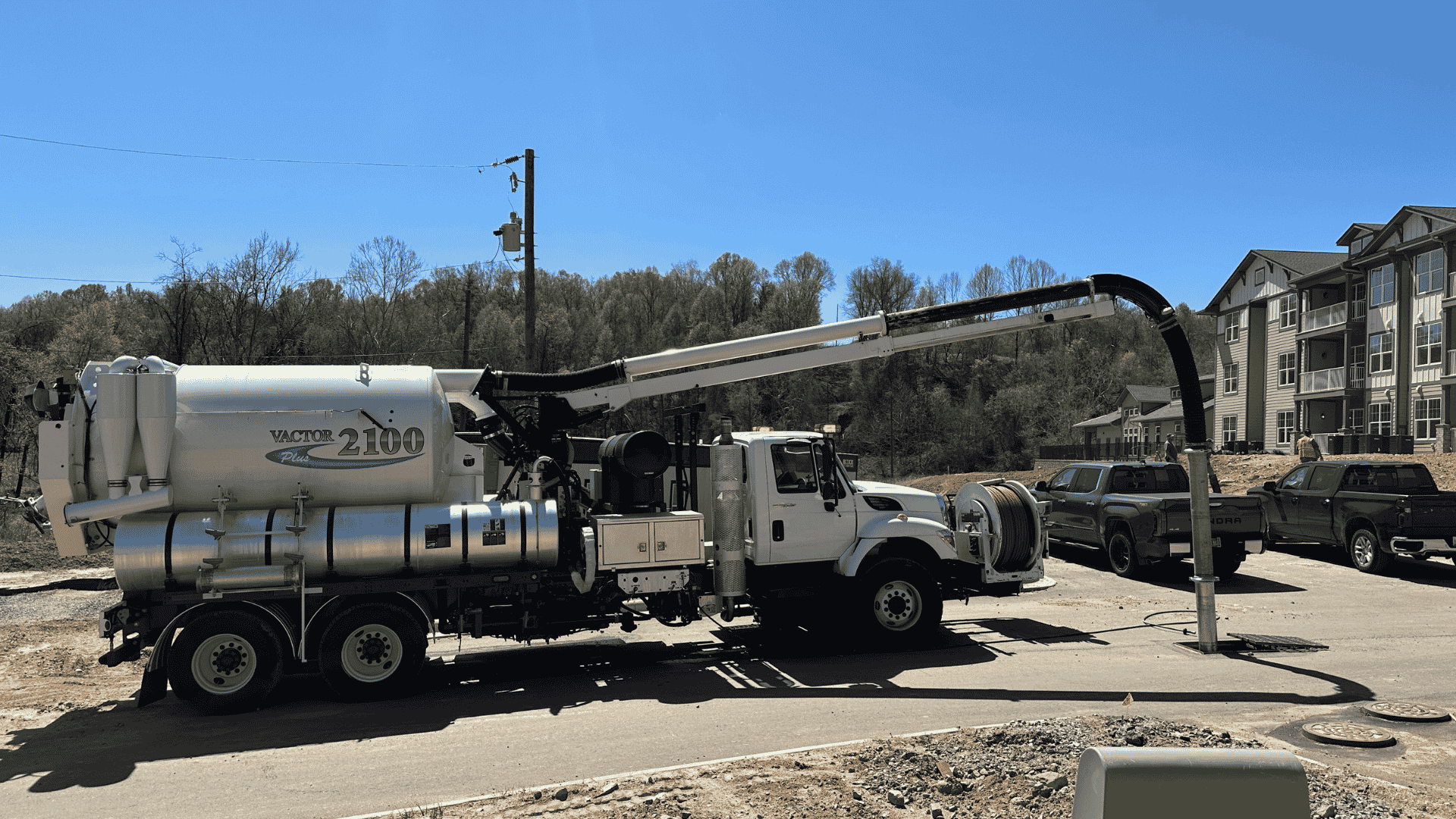
This guide breaks down the factors that actually determine your optimal pumping schedule, explains what the research and regulatory guidance says about frequency, covers the warning signs that mean you're already overdue, and gives you a framework for building a schedule that fits your specific property rather than a generic recommendation.
Quick Summary
- The EPA's three-to-five-year baseline is a starting point, not a prescription.
- For a 1,000-gallon tank, a household of one to two people can typically go four to five years; three to four people should pump every three to four years; five to six people every two to three years.
- Shorten any interval by at least a year if you have a garbage disposal connected to the system, use a water softener, own a vacation rental, or have a system older than 20 years with no recent evaluation.
- WNC's clay soils and seasonal high water tables are additional reasons to pump at the shorter end of your range.
- The cost argument is simple: a routine pump-out starts at $400, while drainfield repair or replacement can run $15,000 or more.
- Signs you're already overdue include slow drains throughout the house (not just one fixture), gurgling toilets, sewage odors inside or outside, and unusually lush or wet patches of grass over the drainfield.
Why Pumping Frequency Matters More Than Most People Think
The Real Cost of Getting It Wrong
Under-pumping is the more common problem, and it has consequences that extend well beyond the tank itself. When solids accumulate in the tank faster than they break down, the layer of undigested material grows until it reaches the outlet baffle. At that point, solids begin flowing into the drainfield, clogging the distribution pipes and gradually destroying the soil's absorption capacity.
Drainfield rehabilitation or replacement is the most expensive outcome of deferred septic maintenance. Costs for drainfield repair or replacement in WNC range from several thousand dollars for minor rehabilitation to $15,000 or more for a full system replacement, particularly on mountain properties where soil conditions complicate installation. A routine pump-out that starts at $400 looks like a very different investment against that backdrop.
Over-pumping, while less harmful to the system, is an unnecessary expense. If a household of two people with a 1,500-gallon tank is pumping every year, they're spending money on service the system doesn't need. Understanding your actual accumulation rate lets you schedule service when it's genuinely needed rather than on an arbitrary calendar.
The Baseline: What NC and EPA Guidelines Say
Official Recommendations for Septic Pumping Frequency
The Environmental Protection Agency recommends that most residential septic systems be inspected every three years and pumped every three to five years, depending on usage. North Carolina follows similar guidance through NC DHHS and the Department of Environmental Quality, which administers on-site wastewater regulations across the state.
These guidelines are designed to apply to a typical single-family home with a properly sized tank and average household occupancy. They are a reasonable default for many properties, but they are not a precise prescription for any specific home.
The Factors That Actually Determine Your Schedule
Household Size and Water Use
The number of people in your household is the single most influential variable in how quickly your tank fills. More people mean more wastewater volume and more solids entering the tank every day. The relationship isn't perfectly linear, but it's close enough to use as a planning tool.
A general guideline for a standard 1,000-gallon tank:
- One to two people: pump every four to five years
- Three to four people: pump every three to four years
- Five to six people: pump every two to three years
- Seven or more people: pump every one to two years
These ranges shift based on tank size. A larger tank handles more people at longer intervals. A smaller tank fills faster for any household size.
Tank Size
Tank size directly affects how long you can go between pumpings. Homes in WNC most commonly have tanks in the 1,000 to 1,500-gallon range, but older properties sometimes have smaller tanks installed under earlier code requirements, and newer or larger homes may have tanks of 2,000 gallons or more.
If you don't know your tank's capacity, your county environmental health department maintains records for permitted systems. Knowing this number is the first step toward calculating a meaningful pumping interval.
System Age and Condition
Older septic systems, particularly those with aging concrete tanks common in WNC's older housing stock, may have reduced effective capacity due to sludge accumulation on tank walls or structural changes over time. A concrete tank that was installed in 1975 and has received irregular pumping may have a smaller functional volume than its nominal size suggests.
If you've purchased a home with an older system and no reliable service history, treat the first pump-out as a baseline assessment rather than a routine maintenance event. Your technician can give you a realistic picture of the tank's current state and what that means for future scheduling.
The WNC Mountain Property Factors
Western North Carolina properties have several characteristics that push pumping frequency toward the more frequent end of standard ranges.
Seasonal Usage Patterns
Many WNC properties experience significant seasonal variation in occupancy. A vacation home occupied heavily in summer and fall and lightly in winter accumulates solids differently than a full-time residence. Properties that sit empty for extended periods may actually allow some biological breakdown to occur, while properties used intensively during peak tourism seasons may accumulate faster than a full-time household of the same size.
Garbage Disposals and Water Softeners
Garbage disposals significantly increase the volume of solids entering the tank, shortening the effective interval between pumpings. If your home has a garbage disposal connected to the septic system, reduce your pumping interval by at least one year from the baseline recommendation.
Water softeners present a different problem. The backwash cycle introduces large volumes of salt brine into the tank, which can disrupt the bacterial activity that breaks down waste and add unnecessary volume to the system. Homes with water softeners on septic should pump at the shorter end of their recommended range.
High-Water-Table and Clay Soil Properties
As covered in detail in our guide on spring rains and septic systems in WNC, mountain properties with high seasonal water tables or heavy clay soils operate under more stress than properties in better-draining locations. These systems benefit from keeping the tank as empty as possible heading into wet seasons, which argues for pumping at the shorter end of the applicable range.
Recommended Schedules for Different WNC Property Types
Full-Time Residences
For a standard full-time WNC home with two to four occupants and a 1,000 to 1,500-gallon tank, the three-to-four-year range is appropriate for most situations. Adjust toward the shorter end if any of the following apply:
- Garbage disposal connected to the system
- Water softener in use
- System is older than 20 years with no recent evaluation
- Property sits in a lower-elevation area with seasonal groundwater concerns
- Household has grown since the last pumping
Vacation Rentals and Short-Term Rental Properties
Black Mountain, Asheville, and the broader WNC region have a large and growing stock of vacation rental properties. These properties often receive more total wastewater volume per unit of time than a comparable full-time home, because rental occupancy commonly exceeds what the system was designed for.
Rental property owners should treat pumping as an annual maintenance item rather than a three-to-five-year event. Pairing an annual pump-out with a certified septic inspection every two to three years provides both routine maintenance and the documented condition record that platforms and insurers increasingly expect.
Newly Purchased Properties Without Service History
If you've bought a home and have no reliable record of the last pump-out, schedule service promptly regardless of when the previous owners said it was last done. A current baseline is more valuable than secondhand information of uncertain accuracy. Your technician will be able to tell you where the sludge and scum layers are relative to the tank outlet, which gives a realistic picture of how urgently pumping is needed and how the system has been maintained.
Commercial and Multi-Unit Properties
Commercial properties, accessory dwelling units, and multi-unit rentals generate substantially more wastewater than single-family homes and should be evaluated for pumping frequency individually rather than defaulted to residential guidelines. Annual inspection and pumping is the appropriate starting point for most commercial septic systems.
Signs You're Already Overdue for a Pump-Out
When to Schedule Service Regardless of Your Calendar
Don't wait for the scheduled interval if you're experiencing any of these symptoms:
- Slow drains throughout the home, not just in one fixture
- Gurgling sounds from toilets or drains when water is used elsewhere in the house
- Sewage odors inside or outside the home
- Wet or unusually green patches of grass over the drainfield
- Toilets that drain sluggishly or back up
These are signs that the system is under active stress, and scheduling a pump-out is the appropriate first response. If pumping doesn't resolve the symptoms, a septic system inspection can determine whether a more significant problem is developing. For a complete breakdown of warning signs specific to WNC mountain properties, read our blog on septic tank odors and what they mean.
Frequently Asked Questions
What happens if I wait too long to pump my septic tank?
Solids in an overfull tank begin flowing toward the drainfield outlet. Once solids reach the drainfield, they clog the distribution pipes and soil pores, reducing the field's absorption capacity. This can cause backups, surface effluent, and eventually require drainfield repair or replacement, a far more expensive outcome than a routine pump-out.
Can I pump my septic tank too often?
Yes, though it's less common. Pumping very frequently removes the bacterial population in the tank that breaks down solids, forcing the system to re-establish that biology from scratch. For most homeowners this is not a practical concern, but pumping annually when your household size and tank capacity don't require it is spending money unnecessarily.
How much does regular septic pumping cost in WNC?
Viking's septic tank pumping starts at $400. The total depends on tank depth and accessibility. Buried lids add excavation cost at $100 per foot of depth. Compared to the cost of drainfield repair or system replacement, routine pumping is consistently the most cost-effective investment in septic system longevity.
Is the three-to-five-year guideline accurate for WNC mountain homes?
It's a reasonable baseline, but many WNC properties benefit from service closer to the three-year end of that range or more frequently due to household size, system age, rental use, or mountain soil conditions. Use the factors outlined in this guide to refine the interval for your specific property.
Does pumping frequency change as a system gets older?
Generally, yes. Older systems with reduced effective tank volume, aging drainfield components, or a history of infrequent service benefit from shorter pumping intervals. An older system that has been well-maintained may still function on a standard schedule, but an older system with an unknown history warrants more frequent attention until you have a reliable baseline.
Can Viking help me figure out the right pumping schedule for my property?
Yes. When our technicians complete a pump-out or inspection, they review the findings with you and can recommend an appropriate service interval based on what they observe. If you're starting from no prior service history, that first visit establishes the baseline for everything that follows.
Set Up Your Personalized Pumping Schedule
There's no single correct pumping interval that applies to every WNC home. The right schedule for your property depends on who lives there, how the property is used, how big your tank is, and how your system has been maintained. Viking Environmental and Septic Services helps Buncombe and Henderson County homeowners build maintenance schedules that actually fit their systems.
Contact us today to schedule your pump-out, review your current maintenance interval, or get a baseline assessment on a system with no reliable service history. Learn more about what our septic tank pumping service includes and what to expect on service day.