The good news is that understanding how heavy rainfall affects your septic system puts you in a much better position to protect it. Knowing what to watch for, when to take action, and what you can do before a storm season arrives can mean the difference between a functioning system and a very expensive emergency.
Quick Summary
WNC receives up to 60-70 inches of rain annually, and the region's clay-heavy soils can go from adequate to saturated within hours of a heavy storm, leaving drainfields with nowhere to send effluent.
The most important things to know:
- if your system backs up during rain, reduce water use immediately and do not pump the tank while the drainfield is still saturated. Pumping won't help and the tank will refill
- symptoms to watch for include slow drains throughout the house, gurgling toilets, sewage odors indoors, and soggy ground over the drainfield that doesn't dry out within a day or two after rain stops
- the best pre-season protection is pumping an overdue tank before storms arrive, checking riser seals for gaps where runoff can enter, and redirecting downspouts away from the drainfield area
- call for emergency service immediately if sewage is backing up into the home or surfacing in the yard.
Why WNC Spring Rains Are Especially Hard on Septic Systems
The Mountain Rainfall Reality
The mountains around Asheville, Hendersonville, and the broader eight-county region that Viking serves receive significantly more rainfall than most of the Southeast. Some WNC communities average 60 to 70 inches of precipitation annually, with spring being one of the wettest periods. That rainfall doesn't just fall on your roof and run into gutters. It saturates the soil around and beneath your property, raising the water table in ways that directly affect how your septic system functions.
A conventional septic system depends on unsaturated soil below the drainfield to absorb and treat effluent. When the water table rises to within a few feet of the drainfield's distribution pipes, there is nowhere for effluent to go. The system backs up, and homeowners experience exactly the symptoms they'd see from a failing system. In that moment, the system effectively is failing, even if nothing is mechanically broken.
Clay Soils Make the Problem Worse
Buncombe, Henderson, and surrounding WNC counties have soil profiles dominated by clay-rich residual soils derived from the region's ancient mountain geology. Clay soils absorb water slowly under ideal conditions and become nearly impermeable when fully saturated. This means that during a heavy spring rain event, the soil around a WNC drainfield can go from adequate to saturated within hours, and it can take days or weeks to drain back down to a functional state.
Properties on flatter ground, in low-lying areas, or at the base of slopes face greater risk because water naturally drains toward them. Mountain homes positioned upslope generally have better natural drainage, but soil depth above bedrock matters as well. Shallow soils over granite or gneiss bedrock, which are common in the WNC mountains, can reach saturation quickly because there is simply less soil to absorb the volume of water.
When Existing System Stress Compounds the Problem
Rainfall doesn't cause failures on its own. It accelerates and reveals failures that were already developing. A system operating close to its capacity because the tank hasn't been pumped recently, or a drainfield that was already showing signs of reduced absorption, is far more vulnerable to a heavy rain event than a well-maintained system with adequate capacity.
This is why spring is the most common season for septic emergencies in WNC. The wet conditions push systems that were borderline into active failure.
Signs That Rain Is Affecting Your Septic System
What to Watch For During and After Storms
Some of these signs appear during or immediately after a heavy rain event. Others may develop over the following days as the soil slowly drains.
Outdoor Warning Signs
- Wet or soggy ground over the drainfield area that persists long after rain has stopped
- Standing water or pooling directly above the drainfield lines
- Sewage odors coming from the yard, particularly near the tank or drainfield
- Unusually lush or bright green grass in a stripe or patch over the drainfield
- Gurgling sounds from outdoor clean-outs or inspection ports
Indoor Warning Signs
- Slow drains throughout the house, not just in one fixture
- Gurgling sounds from toilets or drains when water is run elsewhere
- Toilets that drain sluggishly or require multiple flushes
- A sewage or sulfur odor coming from drains inside the home
- Toilets or drains backing up during or shortly after a heavy storm
If you're seeing multiple signs from both lists at once, the system needs attention now rather than later. For a broader look at the warning signs that precede septic emergencies in WNC, our guide on avoiding septic emergencies covers this topic in detail.
Understanding the Specific Problems Heavy Rain Creates
Saturated Drainfield
Drainfield saturation is the most common rain-related septic problem in WNC. When the soil around and below the distribution pipes becomes fully saturated, the pipes can no longer distribute effluent into the ground. The system backs up into the tank, and if the tank is full or the backup continues, it reaches the house.
Short-term saturation from a single storm event can often resolve itself once the water table drops. Chronic saturation that recurs every spring, or saturation that doesn't improve after a week of dry weather, suggests a more significant problem that requires professional evaluation.
Water Infiltration into the Tank
Older concrete septic tanks common throughout WNC can develop cracks or deteriorated seams that allow groundwater to enter during periods of high water table or saturated soil. When groundwater infiltrates the tank, it dilutes the contents and raises the liquid level. A tank that received an inch of groundwater infiltration every time it rains heavily will fill up far faster than its designed pumping interval and put unnecessary load on the drainfield.
Signs of tank infiltration include a tank that fills quickly despite normal household use, and a tank that appears unusually full at pumping even when the service interval hasn't changed.
Surface Runoff Entering the System
Beyond groundwater, direct surface runoff can enter a septic system through loose or improperly seated risers and lids, damaged clean-out covers, or cracked tank sections that are at or near grade. Runoff carries sediment, debris, and significantly more volume than the system is designed to process.
After a major storm, walking your property and checking riser and lid conditions takes only a few minutes and can identify an entry point before a significant volume of water enters the system.
What to Do If Your System Floods
Immediate Steps When You Suspect Rain-Related Failure
If your system is backing up during or after heavy rain, take these steps:
- Reduce water use in the home immediately to relieve pressure on the system
- Avoid running laundry, dishwashers, or other high-volume appliances
- Do not pump the tank while the drainfield is saturated. This provides only temporary relief and can be wasted if the field cannot absorb effluent
- Contact Viking for an assessment before spending money on service that won't address the actual problem
The most important thing to understand about a rain-related septic backup is that pumping alone may not resolve it if the drainfield is saturated. The right approach depends on diagnosing what is actually happening. Our septic system inspection service gives you an accurate picture of system condition so you're not guessing.
When to Call for Emergency Service
Call Viking immediately if:
- Sewage is backing up into your home
- Effluent is surfacing in your yard and creating direct contact risk
- The system fails to recover within 24 to 48 hours after rain stops
- You can smell sewage strongly inside the home
These conditions indicate that the system is not processing waste safely and needs professional attention regardless of weather conditions. Viking provides 24/7 emergency septic service throughout WNC with no after-hours surcharges.
Preventative Measures Before Storm Season
What You Can Do Before WNC's Wet Season Arrives
The best time to address septic system vulnerabilities is before a major storm event, not during one. Steps that reduce your risk heading into spring:
Have Your Tank Pumped if Overdue
A tank at or near capacity before a heavy rain season has almost no buffer to handle the reduced drainfield absorption that wet conditions create. If your tank hasn't been pumped in three or more years, scheduling a pump-out before spring's peak rainfall period is one of the most effective things you can do to protect your system.
Check and Clear Risers and Lids
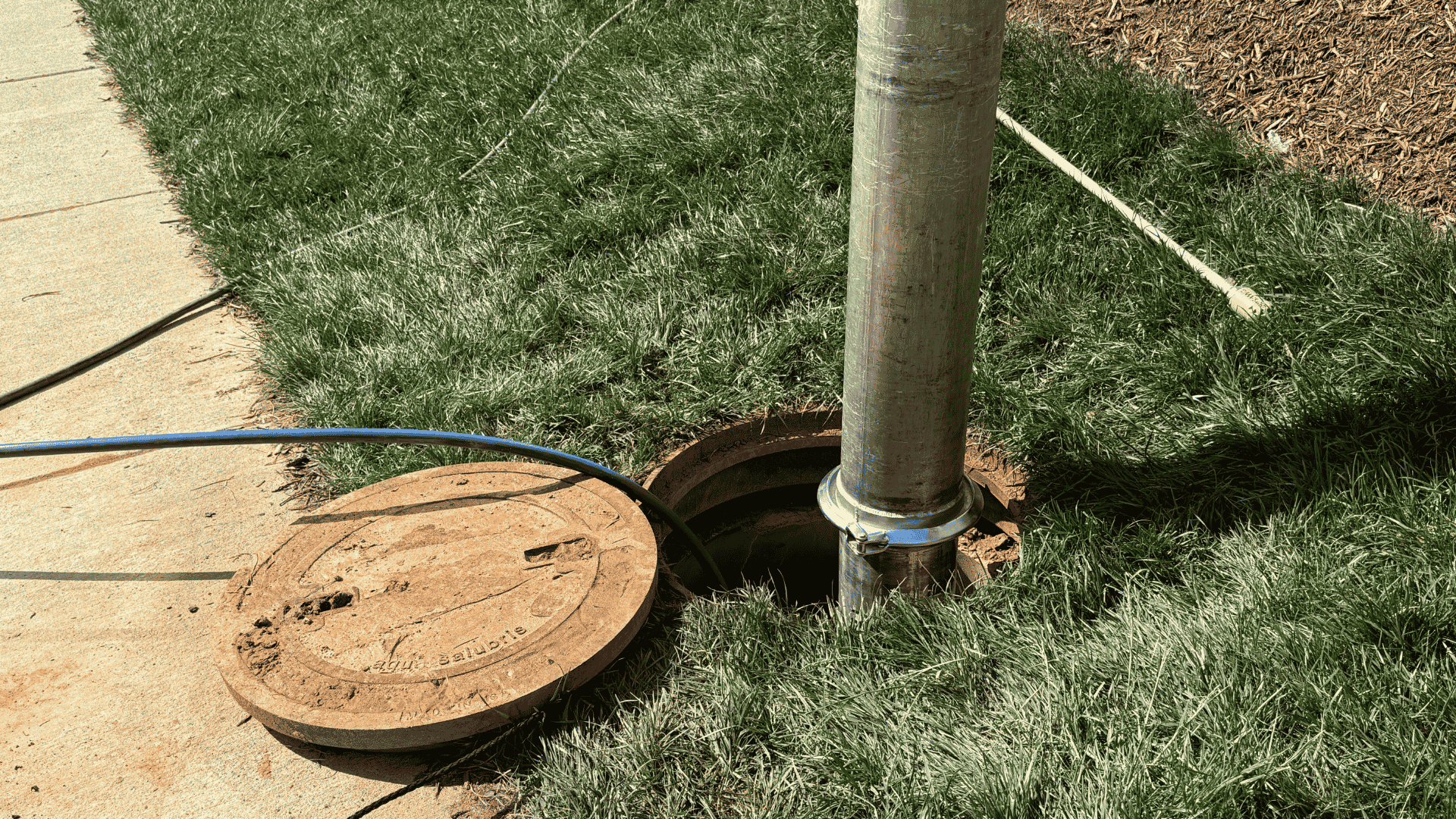
Walk your property and visually check tank risers and lids for proper seating. A lid that has shifted, cracked, or settled unevenly is an entry point for surface runoff. This is a simple check that takes minutes and can prevent significant problems.
Manage Roof Drainage and Grading
Make sure downspouts are directed away from the septic system area and that grading around the tank and drainfield slopes away rather than toward the system. Redirecting roof drainage away from the drainfield area reduces the volume of water the soil in that zone has to absorb during heavy rain events.
Avoid the Drainfield During Wet Periods
Wet soil is far more vulnerable to compaction than dry soil. Keep vehicle and foot traffic away from the drainfield area during and after heavy rains. Compaction of saturated soil can permanently reduce the absorption capacity of a drainfield.
Schedule a Pre-Season Inspection
If your system showed any signs of stress last spring, or if you simply haven't had it professionally evaluated in several years, a certified inspection before the wet season provides both peace of mind and actionable information. Viking's septic system inspections start at $850 and include complete tank pumping.
Frequently Asked Questions
Is it normal for drains to slow down during heavy rain?
Some temporary slowdown is not unusual on properties with older systems or clay-heavy soil, particularly during exceptionally heavy rain events. However, slow drains that persist more than a day after rain stops, or that recur every time it rains moderately, indicate a system that needs attention.
Can I pump my septic tank during a rain event?
It is generally not recommended to pump a tank while the drainfield is actively saturated. The tank will refill quickly as the system backs up, and effluent pumped from the tank has nowhere to go in the drainfield. Pumping makes more sense after the water table drops and the drainfield can begin absorbing again.
Will my system recover on its own after a heavy storm?
Many systems that experience temporary stress during heavy rain do recover once dry conditions return and the water table drops. If the system is back to normal within two to three days of rain stopping, the event was likely a temporary overload rather than a system failure. If problems persist, professional evaluation is warranted.
How does groundwater get into a septic tank?
Groundwater enters through cracked concrete, deteriorated seams, loose riser connections, or damaged inlet and outlet pipe penetrations. Older concrete tanks are particularly susceptible as they age and develop small fractures that widen over time with the expansion and contraction of freeze-thaw cycles.
Does heavy rain mean my drainfield is failing?
Not necessarily. A drainfield that saturates during exceptional rainfall and recovers completely afterward may be functioning normally for its soil and site conditions. A drainfield that saturates during moderate rain, or that never fully recovers, is showing signs of reduced capacity that deserve attention.
What is the best way to protect my WNC septic system from spring rains?
The most effective combination is: keep the tank pumped on a regular schedule, have the system inspected if you've seen any stress symptoms, check riser seals before storm season, and manage drainage around the system to reduce the volume of water directed toward the drainfield area.
Schedule Your Pre-Storm Inspection
If your septic system showed signs of stress during last year's spring rains, or if you simply want to enter the wet season knowing your system is in good condition, a pre-storm inspection from Viking Environmental and Septic Services gives you the information and the peace of mind to make it through WNC's wet spring with confidence.
Contact us to schedule your inspection or to ask about pumping and maintenance services before the heavy rain season arrives.