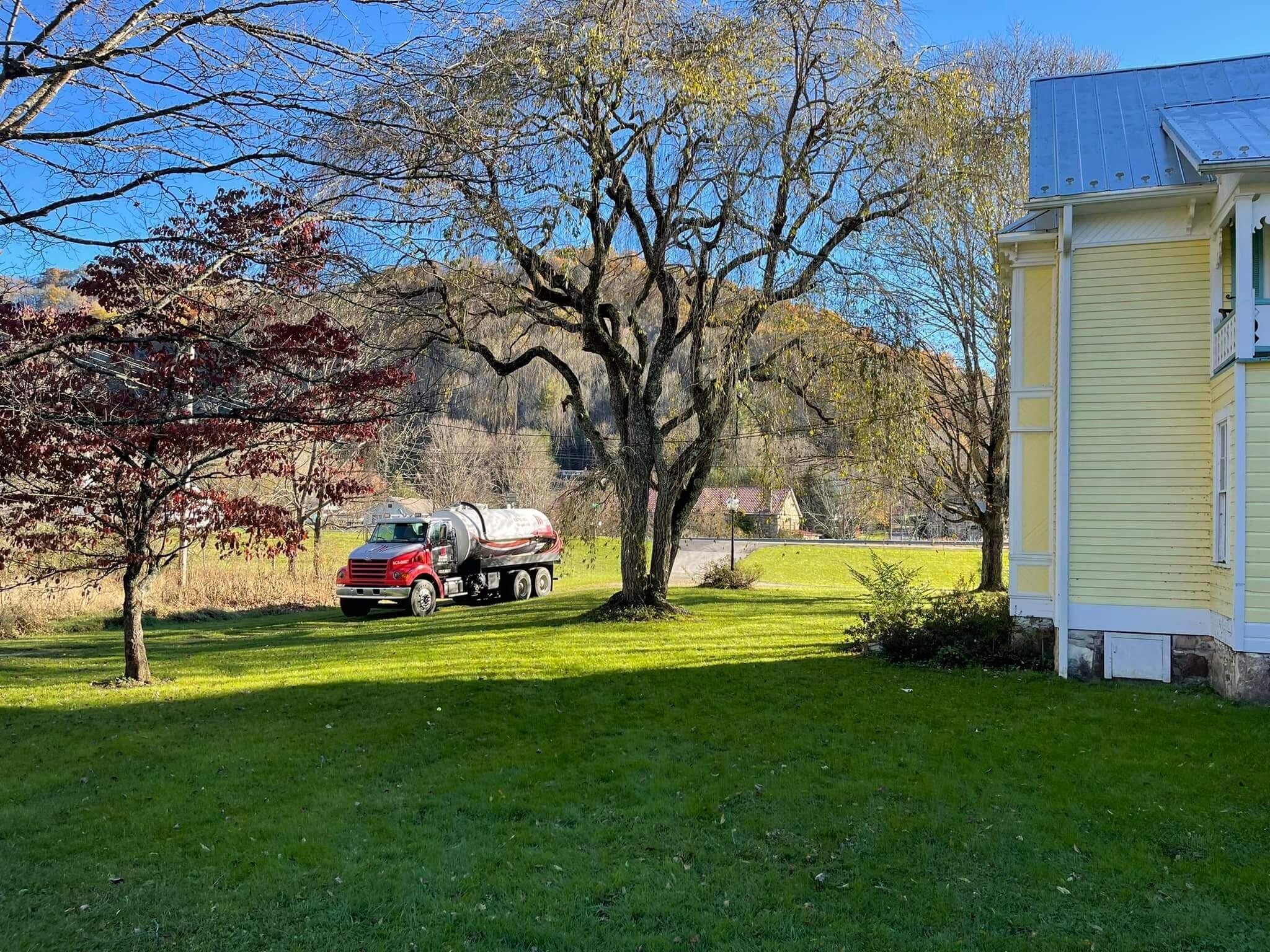
 Professional Drain Field Diagnosis and Repair for Fletcher Properties
A failing drain field turns your septic system from a reliable workhorse into a serious problem. When effluent can't properly absorb into the soil, it has to go somewhere — and that somewhere is usually your yard or, worse, back into your home. Viking Environmental and Septic Services is headquartered right here in Fletcher at 88 Underwood Road, making us the closest full-service septic company for Fletcher homeowners dealing with drain field problems. We diagnose the cause of failure accurately, repair what can be saved, and replace what can't — all with transparent pricing and honest recommendations.
How Drain Fields Work — and Why They Fail
Your septic system's drain field (also called a leach field) is where the real treatment happens. After wastewater leaves the septic tank, it flows into a network of perforated pipes buried in trenches filled with gravel. The effluent seeps through these pipes and filters slowly into the surrounding soil, where naturally occurring bacteria complete the treatment process before the water reaches groundwater.
When this system works properly, you never think about it. When it fails, the consequences are immediate and unpleasant. The EPA identifies drain field failure as one of the most common and costly septic system malfunctions, noting that improper maintenance and poor soil conditions are leading contributors (EPA - Resolving Septic System Malfunctions).
Common Causes of Drain Field Failure in Fletcher
Fletcher's location in the foothills of the Blue Ridge creates specific conditions that can accelerate drain field problems. Understanding these factors helps you recognize trouble early and communicate effectively with your service provider.
Clay-Heavy Soils with Poor Absorption
Much of the soil in the Fletcher area contains significant clay content. Clay absorbs water slowly under normal conditions and can become virtually impermeable when fully saturated. Drain fields installed in clay-heavy soils work harder from day one and have a higher risk of premature saturation, particularly during Western North Carolina's rainy seasons. The EPA emphasizes that soil characteristics must be evaluated carefully before installation, as poor-draining soils are a primary cause of system failure (EPA - How to Care for Your Septic System).
Biomat Buildup
Over time, a layer of biological material called biomat forms in the soil around drain field pipes. A thin biomat layer is normal and actually helps with treatment. But when solids escape the tank due to infrequent pumping or failed baffles, the biomat grows too thick and begins to seal the soil, preventing effluent from absorbing. This is one of the most common drain field failure mechanisms in established Fletcher properties.
Tree Root Intrusion
Fletcher's mature residential areas feature well-established trees whose root systems actively seek out the moisture-rich environment around drain field pipes. Roots can enter through pipe joints, grow through perforations, and eventually crush or block distribution lines entirely. Properties along the tree-lined streets of Fletcher's established neighborhoods are particularly susceptible.
Compaction and Physical Damage
Driving vehicles over the drain field, parking on it, or placing heavy structures above it compresses soil and damages pipes. Even frequent foot traffic can compact soil enough to reduce absorption over time.
System Age
Drain fields typically last 15 to 30 years depending on conditions and maintenance. Many Fletcher homes built in the 1980s and 1990s now have fields approaching or exceeding their expected service life.
Signs Your Fletcher Drain Field Is Failing
Recognizing these warning signs early can be the difference between a manageable repair and a complete field replacement.
Wet, soggy ground over the drain field area — especially when there hasn't been significant rainfall — is one of the clearest indicators. Unusually green or fast-growing grass over the field suggests excess nutrients from surfacing effluent. Sewage odors in the yard, particularly near the drain field or distribution box, signal that wastewater isn't being properly processed underground. Slow drains throughout the house (not just one fixture) indicate the system can't accept wastewater at a normal rate. And sewage backing up into the home means the field has reached a point where it can't absorb any additional volume. The EPA notes that soft, wet, or spongy soil around the drain field, particularly without recent rainfall, is a strong indication of system failure (EPA - Resolving Septic System Malfunctions).
How Viking Diagnoses and Repairs Fletcher Drain Field Problems
Viking's approach starts with accurate diagnosis. Not every drain field problem requires the same solution, and jumping to replacement without proper assessment wastes money.
Comprehensive System Evaluation
We begin by pumping the tank and inspecting it for failed baffles, cracks, or other issues that may be sending solids into the field. Using sewer camera inspection technology, we examine distribution lines to locate blockages, root intrusions, crushed pipes, and areas of ponding. We evaluate the distribution box, check mechanical components, and assess soil conditions in the field area.
Targeted Repair Solutions
Based on our diagnosis, repair options may include hydro-jetting distribution lines to clear biomat, grease buildup, and minor root intrusion. For damaged pipe sections, we can excavate and replace only the affected areas rather than the entire field. Failed distribution boxes, damaged tees, and clogged effluent filters can all be repaired or replaced individually. When tank issues like deteriorated baffles are contributing to field problems, we address the root cause so the repair lasts. To understand how different clearing methods compare, see our blog on hydro-jetting vs. snaking.
When Replacement Is Necessary
If the drain field has reached the end of its useful life, or if damage is too widespread for targeted repairs, Viking provides complete drain field installation services. We coordinate with the Henderson County Health Department on required permitting, design the replacement field to meet current NC regulations, and handle all excavation and construction. Our goal is always to explore repair options first — but when replacement is the right answer, we handle the entire process.
Why Fletcher Homeowners Call Viking First
We're Already Here
Viking is headquartered in Fletcher. There's no travel time, no service area upcharge, no waiting for a crew to drive in from Asheville or Hendersonville. When your drain field is failing, the closest full-service septic company is literally your neighbor.
Full Diagnostic and Repair Capability
Pumping, camera inspection, hydro-jetting, excavation, pipe repair, and field replacement — Viking handles every aspect of drain field diagnosis and repair in-house. One company, one point of contact, one team that sees the project through from diagnosis to completion.
Honest Assessments, Transparent Pricing
We'll tell you what your drain field actually needs — not what generates the biggest invoice. Pumping starts at $400, and we provide detailed estimates for all repair work before starting. Check our reviews to see how Fletcher-area homeowners describe their experience.
Protecting Your Fletcher Drain Field Long-Term
After a repair, these practices help extend your drain field's life. Pump your tank on schedule — every three to five years for most households — to prevent solids from reaching the field. Schedule regular inspections to catch developing issues early. Conserve water by spacing out laundry loads and fixing leaky fixtures. Keep trees and shrubs with aggressive root systems away from the field area. Never drive, park, or build over the drain field. And avoid sending grease, chemicals, or non-biodegradable items down your drains. For more on keeping your system healthy, read our blog on why regular septic pumping matters.
Frequently Asked Questions About Drain Field Repair in Fletcher
How do I know if my drain field is failing or just needs pumping?
If the problems resolve after pumping and don't return for several years, your field is likely fine and the tank simply needed service. If symptoms persist or return quickly after pumping, the drain field itself is likely the issue. Viking's diagnostic process determines exactly which component is failing.
How much does drain field repair cost in Fletcher?
Costs vary significantly depending on the nature and extent of the problem. Clearing blocked lines with hydro-jetting is far less expensive than excavating and replacing a section of field. Viking provides detailed estimates after diagnosis so you know exactly what to expect.
Can a failed drain field be repaired, or does it always need replacement?
Many drain field problems can be repaired without full replacement. Hydro-jetting blocked lines, replacing damaged pipe sections, fixing distribution boxes, and addressing tank-side issues that caused the failure can all restore function. Full replacement is reserved for fields that have reached end of life or have extensive, irreparable damage.
How long does drain field repair take?
Line clearing and component repairs can often be completed in a single day. More extensive work involving excavation and pipe replacement may take several days. Full field replacement is a larger project that includes permitting, design, and construction phases.
Will my yard recover after drain field repair?
Yes. After excavation work, we restore the ground surface and the area will regrow with grass. Most yards look fully recovered within one growing season.
Get Your Fletcher Drain Field Diagnosed Today
Don't let a drain field problem escalate into a system-wide failure. Contact Viking Environmental and Septic Services at (828) 782-0003 to schedule a diagnostic evaluation of your Fletcher drain field. We're right here in town, and we'll give you straight answers about what your system needs.